Showing posts with label Industry. Show all posts
image: https://diybackpacker.files.wordpress.com/2014/01/macaupostcard.jpg

     Macau's reputation as the center of Chinese gambling is under threat after Chinese President Xi Jinping further increased pressure on anti-corruption and economic diversity. Especially threatened are the city's junket operators, whose rich clients are commonly accused of illicit business and agreements during their visits to Macau.
     In response to the pressure, David Group announced it would be closing 4 out of its 5 gambling rooms in Macau, after claims by Frank Ng that the company plans to move its business to the Philippines, Vietnam and South Korea, countries which have all entered the gambling industry relatively recently.
     However, there might yet be hope for Macau, as Ng describes the current conditions not as an ending, but as a hibernation until things improve.
     While David Group might be moving, reports show that China's gamblers aren't going with them, instead ceasing to gamble at all. Casinos in Manila and Vietnam have suffered disappointing revenues in their opening years, as they fail to attract visitors.
     Regardless, Macau's gambling revenue fell for the first time in a decade, leaving many to wonder whether this is a small bump for the industry that makes up over half of Macau's revenue, or the end of a global gambling empire.

     I personally would be sad to see the casinos go. Sure, some may argue that they've robbed Macau of its cultural identity, and replaced it with a corporate, modern environment, but I know that Macau is still the same place at heart as it was when I was young. I find that the casinos, mostly built on reclaimed land, do not dominate the local culture, instead changing it, adding a new, modernized dimension. I am sure that no local would claim that they do not enjoy the new shopping malls, restaurants, and global recognition that the gambling industry has brought, and the local shops and markets certainly benefit from the huge seasonal population increase that has flooded the area with Chinese money.
     Then again, maybe Macau wasn't made for this kind of huge, bustling industry. The shops and restaurants that I enjoyed as a child may still be there, but should development and construction continue at its current pace, I cannot see how these businesses will survive the competition for space and location.
     As a small economy, Macau could also easily become economically over-reliant on gambling, as some may argue it already has. It will be interesting how the Macanese government itself will respond to Xi Jinping's demand for diversification, and whether it will be possible at all to distance the economy from its gambling reputation.
     My greatest fear is that Macau will become a has-been, once-was city, its once-dazzling and vibrant skyscrapers decorating a deserted city that failed to adapt to the changing times and was left behind. Perhaps the construction of the HK-Zhuhai-Macau Bridge will cause the tourism to relapse, and Macau will return to its economic growth, but the volatility of the industry has already been demonstrated, and whatever happens, I just hope that Macau will remain recognizable as my childhood home.

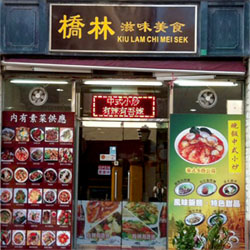
My Grandmother's restaurant in Taipa Village
image: http://i.yp.mo/kiulam/

Read More Here:

Forbes
Business Insider: 12
image: https://media.licdn.com/mpr/mpr/p/1/005/058/38f/0d440c9.jpg
     On January 8, 2015, the National Highway Traffic Safety Administration released a report confirming that between 2003 and 2014, Honda failed to report 1729 death and injury claims to the NHTSA. In response to this, a fine of $35 million was levied on the company, along with an additional fine of $35 million for Honda's failure to report warranty and customer satisfaction claims over the same period.
     Among the incidents that Honda failed to report were accidents involving airbags made by Takata Corp in Japan. The airbags have been found to deteriorate under humid conditions. Additionally, customer complaints about seatbelts, unintended acceleration, and braking were all uncovered in the investigation.
     Honda is one of several companies which faces fines from the NHTSA this year, bringing light to the widespread secrecy and withholding of information that occurs on a regular basis. General Motors, for example, received a $35 million fine for failing to report a faulty ignition switch in their cars, while Hyundai received a $17.3 million fine for issuing what was deemed to be a late recall. These cases, and others, contribute to the $124 million in fines that the NHTSA has levied in 2014, more than it has ever issued in its existence.
     While this increase in consequences clearly displays a commitment to safety and honest business, it is interesting to see whether these fines will have any effect on the way automobile companies do business in the future. Perhaps the money and time saved by not reporting incidents, or issuing recalls outweighs the fines of the NHTSA, and more stringent punishments will have to be put into effect. It is the hope of the author that the fines will have their intended eff
ects, and that a cooperative relationship can be established between companies and their governing bodies, for the safety of consumers around the world.

More here
image: theage.com.au
     A new energy policy is taking effect in Queensland, Australia, lowering overall energy consumption costs, but massively inflating prices for energy services. Effectually, according to director of Country Solar Steve Madson, this policy has no effect on energy bills, and can even lower them, while simultaneously removing all economic incentive for consumers to install new solar systems.

     Madson's suspicion is based in precedent. Prime Minister Tony Abbott described climate change theories as 'crap' in 2009, and earlier this year, Australia became the first developed nation in the world to repeal their carbon tax, despite its effectiveness.

More here
     During the final weeks of Spring term '13-'14, I wrote a research paper for my chemistry class titled 'Chemical Enantioselective Synthesis: The Search for the Other Half.' Certain molecules have a property called chirality, which dictates whether or not the molecule has optical isomers. In essence, two molecules that are exactly the same, but are non-superimposable mirror images of one another, are optical isomers. d- and l- optical isomers (or enantiomers), reflect plane-polarized light in different directions.

     d- and l- enantiomers are crucial in the development of medicine and pharmaceuticals, because enzymes in the human body typically only interact with the d- enantiomer of any given substance. If a substance is administered in a racemic (half d-, half l-) mixture, the l- half of the substance might have undesirable side effects, or might just pass through the human body harmlessly. Therefore, enantioselective synthesis is a crucial process for pharmaceutical companies to manufacture controlled and safe medicines.

     Enantioselective synthesis is complicated, and feasible mechanisms are very difficult to discover. In the paper, I discuss some common synthesis methods, instances of marketed racemic mixtures that went awry, and detail the search for an efficient l-glucose synthesis. Since l-glucose is not absorbed by the body, it can be used as a zero-calorie alternative to d-glucose, the much more common enantiomer, and it has the potential to unlock more secrets of optical isomers.

     Here's the paper, I hope you enjoy it!

Enantiomers and Synthesis of L-Glucose.pdf


     One of the end-of-year projects that has so frustratingly kept me away from this blog was a history paper. Having been given the freedom to do so, I sifted through years of civil rights cases and political trivia to find a topic that I was truly interested in: the Muckrakers. During the Second Industrial Revolution, corporations rose to prominence, exploiting an under-equipped legal system through unethical business practices and humans rights while the American government struggled to keep up with their rapidly industrializing country. The Muckrakers were reform journalists who latched on to these injustices and exposed the corporations through the fourth estate: the press.

     If any of what you have just read interests you, I encourage you to read on.


Image: nanocarbon.cz
     Scientists at Trinity College Dublin have made a leap forward in the race for mass production of graphene, using water, soap, and a blender that reportedly cost €39.95.
     In 2010, Andre Geim and Konstantin Novoselov won a Nobel Prize for their experiments regarding the material, after peeling off thinner and thinner layers of carbon graphite with scotch tape until they produced graphene, a material no more than a few atoms thick. Now, researchers at the materials science center in Dublin have substituted the sticky tape method for a blender, which separates the layers of graphite, and a water-based surfactant which keeps the layers apart.
    Graphene has fascinated the scientific community since its discovery, and now that progress is being made towards the production of the wonder material, a wholly new realm of possibilities is revealing itself. The graphene industry, which is predicted to be worth $100 million by 2018, could potentially revolutionize everything from clean water, to smartphones, to cleanup of nuclear waste.

More Here: Independent